You want the freedom to ride at home, the privacy of open acreage, and the convenience of being minutes from Aspen. Buying in McLain Flats can deliver all three, but the best properties also come with complex details. This checklist walks you through what to verify first, from zoning and water rights to arena design, winter operations, and long-term resale. Use it to move quickly and confidently on the right estate. Let’s dive in.
Property and legal due diligence
Confirm zoning and permitted uses
Verify which jurisdiction governs the parcel: City of Aspen or unincorporated Pitkin County. Ask planning staff to confirm building envelopes, setbacks, height limits, and allowances for accessory agricultural structures. Clarify animal unit limits and any rules around commercial boarding if you plan to board for pay. Ask about overlays or special districts that could affect exterior materials or development scope.
Title, easements and covenants
Order a current title report early. Identify utility, access, trail, and conservation easements that could limit fencing, lighting, or where you place barns and arenas. Look for scenic, agricultural, or open-space easements that restrict subdivision or future development. Note any recorded public access near riparian corridors and plan privacy buffers accordingly.
Water rights and irrigation
In Colorado, water rights are separate from land. Confirm whether stock water or irrigation rights convey, their priority dates, and whether they are surface rights or well rights. If a well exists or is planned, verify permits and any augmentation requirements with the state. If pasture relies on irrigation, request historic diversion records, ditch association fees, and typical seasonal availability.
Utilities and capacity
Confirm potable water source and any constraints for accessory structures. Determine whether the property is on municipal sewer or septic, then review septic permits, design, age, bedroom capacity, and maintenance history. Evaluate electrical service for barn HVAC, heated waterers, and arena lighting, and plan for upgrades if needed. Consider backup power for winter and fire scenarios.
Permits and building envelopes
Request the building permit history and as-built plans for barns, arenas, corrals, and any guest or staff housing. Confirm that existing structures match permitted plans and are within building envelopes. Check for floodplain, wetland, or hazardous area designations that could restrict new construction or expansion.
Taxes and insurance
Ask the Pitkin County Assessor about agricultural or open-space classifications and eligibility requirements. Confirm inspection cycles if you pursue ag valuation. Review property, liability, wildfire, flood, and equine liability coverages, especially if you plan to board or host events. Budget for premium differences tied to wildfire and flood risk.
Site, environment and hazards
Topography and drainage
For barns and arenas, flatter terrain is better. Assess how runoff moves through the site to prevent erosion of paddocks and arena subgrades. Verify soil percolation for septic feasibility and identify clay or bedrock that could affect drainage and construction costs. Map out snowmelt paths and storage areas.
Soils, forage and pasture potential
Request soil survey data and evaluate pasture productivity. Check whether native grasses will support your goals or if irrigation and overseeding are needed. Assess existing fencing and subdivision for rotational grazing and appropriate stocking density. Plan sacrifice areas to protect footing in wet periods.
Floodplains and wetlands
Many valley-floor properties sit near creeks and rivers. Review FEMA and county flood maps and ask about local riparian setbacks. Identify jurisdictional wetlands and whether any Army Corps or state permits would be required for alterations. Factor in constraints when siting arenas, barns, or fencing.
Wildfire mitigation
Even valley-floor parcels face wildfire risk from embers and nearby slopes. Confirm defensible space, ignition-resistant materials, and access for fire equipment. Verify water supply for firefighting, such as hydrant access or on-site cisterns. Integrate mitigation early to support insurance and safety.
Winter and access logistics
Aspen winters bring freeze-thaw cycles and high snow loads. Verify roof load ratings and snow-shedding plans for arenas and barns. Evaluate driveway grading, snow storage, and year-round access for staff, vets, and deliveries. Consider solar exposure for paddocks and barns to improve footing dryness and winter comfort.
Wildlife and ecology
Expect mule deer, elk, and predators in the region. Choose fencing and feed storage to reduce attractants and protect animals. Be mindful of river buffers and ecological protections that can guide site planning. Incorporate habitat-sensitive design where possible.
Equestrian infrastructure checklist
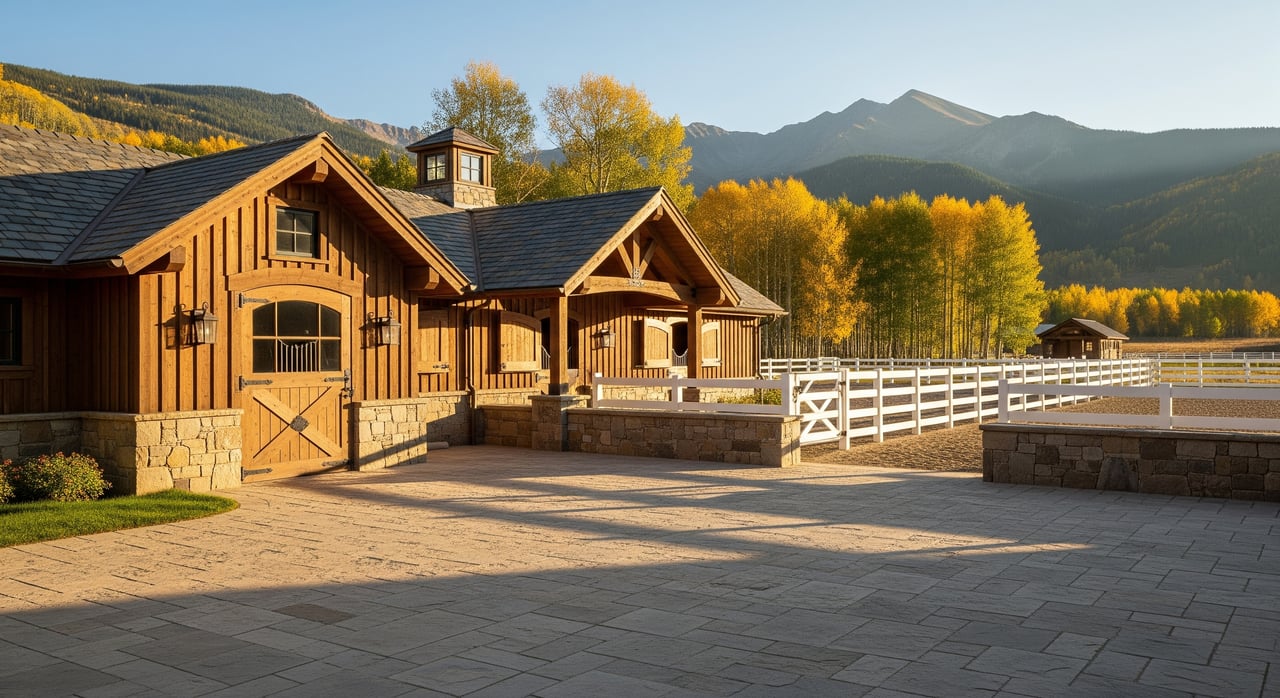
Barn and stable design
- Stall size: target 12 ft x 12 ft; consider 12 x 14 ft or 14 x 14 ft for larger horses or luxury programs.
- Aisle width: plan 10–12 ft to accommodate equipment and safe movement.
- Ventilation: combine natural features like ridge vents and cupolas with mechanical systems for winter air quality.
- Tack and feed rooms: secure, dry, and rodent resistant, with separation from wash and manure areas.
- Wash bays: heated with non-slip flooring and proper drainage; hot water systems are valuable in cold months.
- Hay storage: enclose and ventilate well, with fire safety spacing or fire-rated construction per local code and insurance guidance.
- Hay planning: a single adult horse often consumes about 15–25 lb of hay per day, or roughly 2.7–4.6 tons per year. Size storage to your herd and winter inventory strategy.
Arenas and exercise areas
- Dressage arenas: standard sizes are 20 m x 60 m or 20 m x 40 m, with flat grade and thoughtful drainage.
- Outdoor arenas: build a well-drained sub-base and base with footing selected for your discipline and winter performance.
- Indoor arenas: decide on heated vs unheated based on use and budget; confirm roof snow-loading, ventilation, and equipment access.
- Round pens: common diameter is 50–60 ft for groundwork and lunging.
- Turnout and warm-up: separate from primary arenas to protect footing and improve safety.
Fencing, gates and paddocks
- Fence height: typically 4.5–5 ft; consider 5 ft for jumpers or nervous horses.
- Materials: wood post-and-rail, pipe rail, vinyl, high-tensile electrified, or mesh for young horses. Balance safety, aesthetics, and maintenance.
- Gates: size drive gates for trucks and trailers; provide pedestrian gates for daily flow.
- Paddock design: plan for rotation, shelter, and defined sacrifice zones to manage mud.
Turnout, shelters and shade
- Provide run-in sheds sized to herd and weather exposure. A common approach is 12–20 ft wide per shed, adjusted to the number of horses and local conditions.
- Use natural shade and windbreaks where possible and orient shelters for winter winds and sun.
Manure and drainage controls
- Create a manure management plan with composting or scheduled removal and setbacks from waterways.
- Capture wash-water where required, especially if it contains detergents. Some counties require septic or holding tanks for wash-water.
- Control arena and paddock runoff with drains and berms to protect streams.
Mechanical systems and utilities
- Install heated waterers or frost-free hydrants with insulated piping.
- Ensure electrical capacity for lighting, HVAC, and equipment.
- Add backup generator capacity for critical systems.
Access, parking and trailers
- Provide ample parking for owners, guests, staff, and service vehicles.
- Design separate trailer circulation with generous turn radii and wide gates.
Operations, services and ongoing costs
Veterinary, farrier and specialized care
Map out local equine veterinarians, farriers, and emergency coverage. Confirm winter response times and availability for urgent calls. Identify whether specialized services like orthopedics or reproduction require travel. Build relationships before you need them.
Feed supply and winter storage
Confirm hay suppliers and price seasonality. High elevation can limit local production, so many owners store larger seasonal supplies or source from lower elevations. Ensure truck access for bulk deliveries and size storage for your winter consumption plan. Keep backup sources for peak demand.
Staff and labor
Evaluate the local labor pool for barn managers, grooms, and maintenance roles. Winter needs often increase staffing for turnout, snow removal, and early feeding. Consider on-site employee housing and confirm permits for ADUs or staff quarters. Define schedules and service standards early.
Liability, boarding and commercial uses
If you will board, host lessons, or run events, confirm business licensing, zoning allowances, and insurance requirements. Prepare waivers, releases, and risk-management practices for clients and third-party providers. Align your operating plan with neighborhood expectations to maintain good relations.
Winter-specific costs
Budget for snow removal across driveways, parking, gates, and service paths. Plan snow storage that does not flood arenas or paddocks during melt. Expect increased hay consumption in winter and set delivery cadence accordingly. Maintain heating and ventilation systems on a regular schedule.
Ongoing maintenance
Schedule routine fencing repairs, arena dragging and footing renewal, barn ventilation service, septic pumping, and pest control. Prepare summer fly and insect programs. Keep logs for service intervals and warranties. Proactive care protects both horse health and property value.
UHNW priorities in McLain Flats
Privacy and buffers
Prioritize parcels with topographic or vegetative screening and generous setbacks. Assess the cost and timeline for landscape screening if you want instant privacy. Understand trail easements and public access corridors that could affect sightlines and security. Plan design strategies that protect views without inviting curiosity.
Scale and guest amenities
Consider separate staff or guest housing, climate-controlled tack rooms, heated arenas, and secure storage for high-value equipment. Design service circulation so daily operations do not overlap with guest arrivals. Keep the barn experience refined and functional. Balance spectacle with low-maintenance choices.
Conservation and tax trade-offs
Conservation easements can preserve views and privacy while limiting development rights. They may support your long-term stewardship goals but can affect future plans and resale. Evaluate legal and tax implications with your advisors before committing. Clarity now prevents surprises later.
Resale and marketability
Large equestrian parcels near Aspen are a niche market. Proximity to Aspen, permitted uses, scenic quality, and quality of improvements drive demand. Highly customized features can narrow your buyer pool, while well-designed arenas, modern barns, and staff housing often improve liquidity. Plan improvements that fit the broader market, not just a single discipline.
Community relations
Equestrian operations can draw attention for truck traffic and odors if not managed well. Use best practices for manure handling, traffic routing, and noise control. Communicate with neighbors as you plan changes. Good relations support both enjoyment and long-term value.
Step-by-step path to close
- Define goals and scale
- Clarify headcount of horses, intended disciplines, staffing, and privacy requirements.
- Run a quick zoning and entitlement screen
- Verify jurisdiction, permitted uses, animal limits, and any overlays.
- Order title, easement, and tax reviews
- Pull a full title report and confirm any conservation or access easements. Check current tax classification and ag eligibility.
- Confirm water rights and wells
- Validate water-rights type, priority, and delivery method. Review well permits and any augmentation plans.
- Inspect site conditions
- Evaluate topography, soils, drainage, floodplain, wetlands, and wildfire risk.
- Audit existing equestrian improvements
- Compare barns, arenas, and corrals to permits and as-builts. Confirm electric capacity and mechanical systems.
- Draft an infrastructure plan and budget
- Align stall counts, arena specs, fencing, shelters, and storage with your program and winter operations.
- Line up insurance and vendors
- Obtain quotes for property, wildfire, flood, and equine liability. Identify veterinarians, farriers, hay suppliers, and snow services.
- Structure offer strategy and contingencies
- Use clear timelines for water-rights verification, permit review, and environmental diligence. Protect your position while staying competitive.
- Close and operational onboarding
- Set up snow removal, hay deliveries, vet schedules, and staff housing. Implement mitigation and maintenance calendars from day one.
Ready to see what is possible in McLain Flats and across the Roaring Fork Valley? For discreet guidance, private tours, and a tailored acquisition plan, connect with Dayna + Mandy - Mandy Welgos. I will help you move with confidence, protect your interests, and secure the right equestrian legacy in Aspen.
FAQs
What zoning rules apply to McLain Flats equestrian estates in Pitkin County?
- Confirm whether the parcel is in the City of Aspen or unincorporated Pitkin County, then verify building envelopes, setbacks, height limits, animal unit limits, and any overlays with the applicable planning department.
How do Colorado water rights affect an equestrian property purchase?
- Water rights are separate from land; verify whether irrigation or stock rights convey, the priority dates, and whether rights are surface or well-based, and confirm any well permits or augmentation requirements.
How much hay should I plan to store for Aspen winters?
- A typical adult horse consumes about 15–25 lb of hay per day, or roughly 2.7–4.6 tons per year, so size your storage to herd size and winter delivery cadence.
Are indoor arenas practical in Aspen’s climate?
- Yes, but you should confirm roof snow-loading, ventilation, and equipment access, and decide on heated vs unheated based on use, budget, and winter operations.
What insurance coverages should I consider for an equestrian estate near Aspen?
- Review property and liability policies, plus wildfire, flood, and equine liability; add commercial coverage if you plan boarding, lessons, or events.
Do conservation easements help or hurt resale in McLain Flats?
- They can secure privacy and open-space buffers but limit development rights, so evaluate legal and tax implications and consider how restrictions may affect future buyers.